Choosing the right steam boiler for any industrial operation is an important decision. A steam boiler is not just a tool – it is the foundation of your heating and production process. The right choice can improve efficiency, reduce operating costs, increase safety and support long-term business growth. On the other hand, an unsuitable boiler can lead to higher fuel consumption, frequent downtime and maintenance challenges.
Understanding Your Steam Needs
The first step in choosing a steam boiler is to understand your actual steam demand. Different industries require different steam capacities, pressures, and temperatures. For example, a food processing unit may require low-pressure steam for cooking and cleaning, while a power plant or chemical factory may require high-pressure steam for continuous operation.
You should evaluate how much steam your process requires per hour, whether demand is constant or fluctuating, and how important an uninterrupted steam supply is to your operation. Sizing the boiler properly helps avoid energy waste and ensures stable operation.
Choosing the Right Type of Steam Boiler
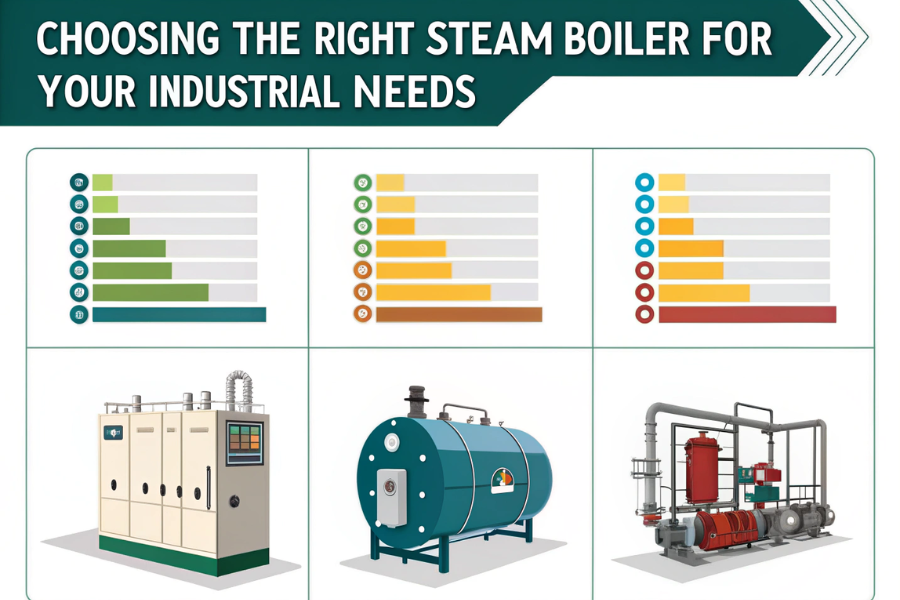
Steam boilers come in a variety of designs, each suited to specific applications. Choosing the right type depends on pressure requirements, capacity, space availability, and complexity of operation.
Fire Tube Steam Boiler
Fire tube boilers are commonly used in small to medium industries. In these boilers, hot gases pass through tubes surrounded by water. They are known for their simple design, easy operation, and low initial investment. Fire tube boilers are ideal for applications that require moderate steam pressure and steady output.
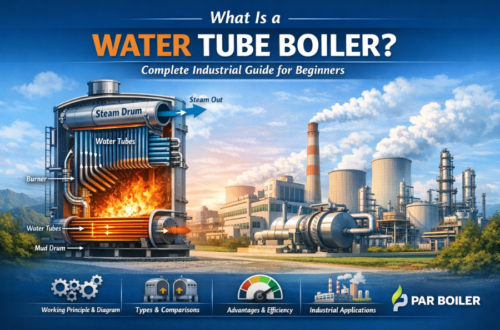
Water Tube Steam Boiler
Water tube boilers are designed for high-pressure and high-capacity applications. Water flows inside the tubes while hot gases circulate around them. These boilers are suitable for large industries, power plants, and heavy manufacturing units where continuous and high steam output is required.
Package Steam Boilers
Package boilers are pre-engineered and factory-assembled units that require minimal on-site installation. They are compact, reliable, and ideal for industries with limited space or tight project timelines.
Electric Steam Boilers
Electric boilers use electricity instead of fuel combustion. They are clean, quiet, and highly efficient, making them ideal for industries with strict emission standards, laboratories, and healthcare facilities.
Fuel Selection and Availability
Fuel selection plays a key role in the efficiency and operating costs of a boiler. Steam boilers can run on coal, oil, gas, biomass, agro-waste or electricity. When choosing a boiler, consider the availability, cost and consistency of fuel supplies in your region.
Many modern industries are moving towards biomass and multi-fuel boilers to reduce fuel costs and environmental impact. A boiler that supports multiple fuels provides flexibility and future-proofs your investment against fluctuations in fuel prices.
Efficiency and Energy Savings
Boiler efficiency directly impacts your operational costs. A high-efficiency steam boiler consumes less fuel while producing the same amount of steam, resulting in long-term savings. Look for boilers with optimized combustion systems, proper insulation, and advanced heat transfer design.
Modern boilers often include features such as economizers, condensate recovery systems, and automated controls. These technologies help recover waste heat, reduce energy loss, and improve overall system efficiency.
Space Constraints and Installation Requirements
Industrial facilities often have space limitations. Before choosing a steam boiler, evaluate the available installation area, ceiling height, and access for maintenance. Compact and packaged boilers are ideal for facilities with limited space, while larger plants can accommodate high-capacity water tube boilers.
Ease of installation also matters. Boilers that are pre-tested and factory-assembled reduce installation time, labor costs, and commissioning delays.
Safety and Compliance Considerations
Safety is non-negotiable when it comes to steam boilers. High pressure and temperature make boilers potentially hazardous if not properly designed and maintained. Always ensure the boiler complies with national and international safety standards.
Key safety features include pressure relief valves, water level indicators, alarms, and automatic shutdown systems. Advanced control panels and automation further enhance safety by continuously monitoring operating conditions and preventing human error.
Maintenance and Long-Term Reliability
A steam boiler is a long-term investment, so reliability and ease of maintenance should be top priorities. Boilers designed with high-quality materials and robust construction tend to have a longer service life and fewer breakdowns.
Regular maintenance, proper water treatment, and timely inspections are essential for optimal performance. Choosing a boiler from a manufacturer that offers strong after-sales support and spare part availability can significantly reduce downtime.
Environmental Impact and Sustainability
With increasing environmental regulations, industries must consider the environmental performance of their steam boilers. Low-emission burners, clean fuels, and efficient combustion systems help reduce the carbon footprint.
Biomass and waste-fueled boilers allow industries to reuse agricultural or industrial waste, which promotes sustainable operations. Condensate recovery and water-saving technologies further enhance environmental responsibility.
Matching the Boiler to Your Industry
Every industry has unique requirements. Textile units focus on consistent steam for dyeing and finishing. Food and beverage industries require hygienic and reliable steam for processing and cleaning. Chemical and pharmaceutical plants demand precise temperature and pressure control.
Working with experienced manufacturers like Par Boiler helps ensure your steam boiler is customized to your industry’s specific needs, delivering optimal performance and compliance.
Choosing the right steam boiler is a strategic decision that affects efficiency, safety, and profitability. By carefully evaluating steam requirements, boiler type, fuel options, efficiency, space, and long-term maintenance, industries can make informed and confident choices.
A well-selected steam boiler not only supports smooth industrial operations but also contributes to energy savings and sustainable growth. Investing time in the selection process ensures your boiler remains a reliable asset for years to come.